Safety first is the guiding principle of the aviation sector. Every system in an aircraft, regardless of how minor or unimportant it may appear, is essential to maintaining the machine’s overall performance and safety. The repercussions can be disastrous if even one part fails. Unfortunately, the existence of fake, or untraceable , unapproved aircraft parts is becoming a bigger problem for the global aviation supply chain. These parts pose one of the biggest risks to aviation safety today, whether they are brought in by unapproved vendors or cost-cutting measures.
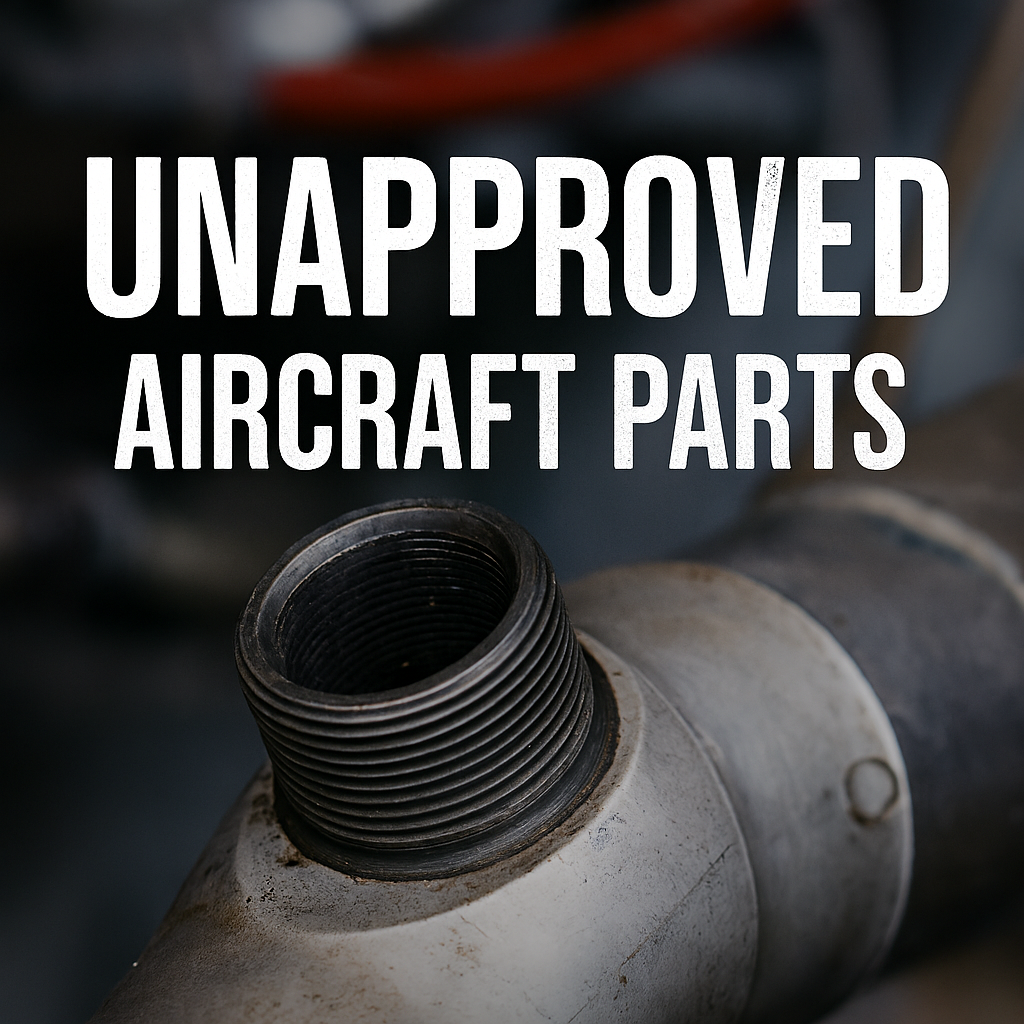
Understanding Unapproved and Counterfeit Aircraft Parts
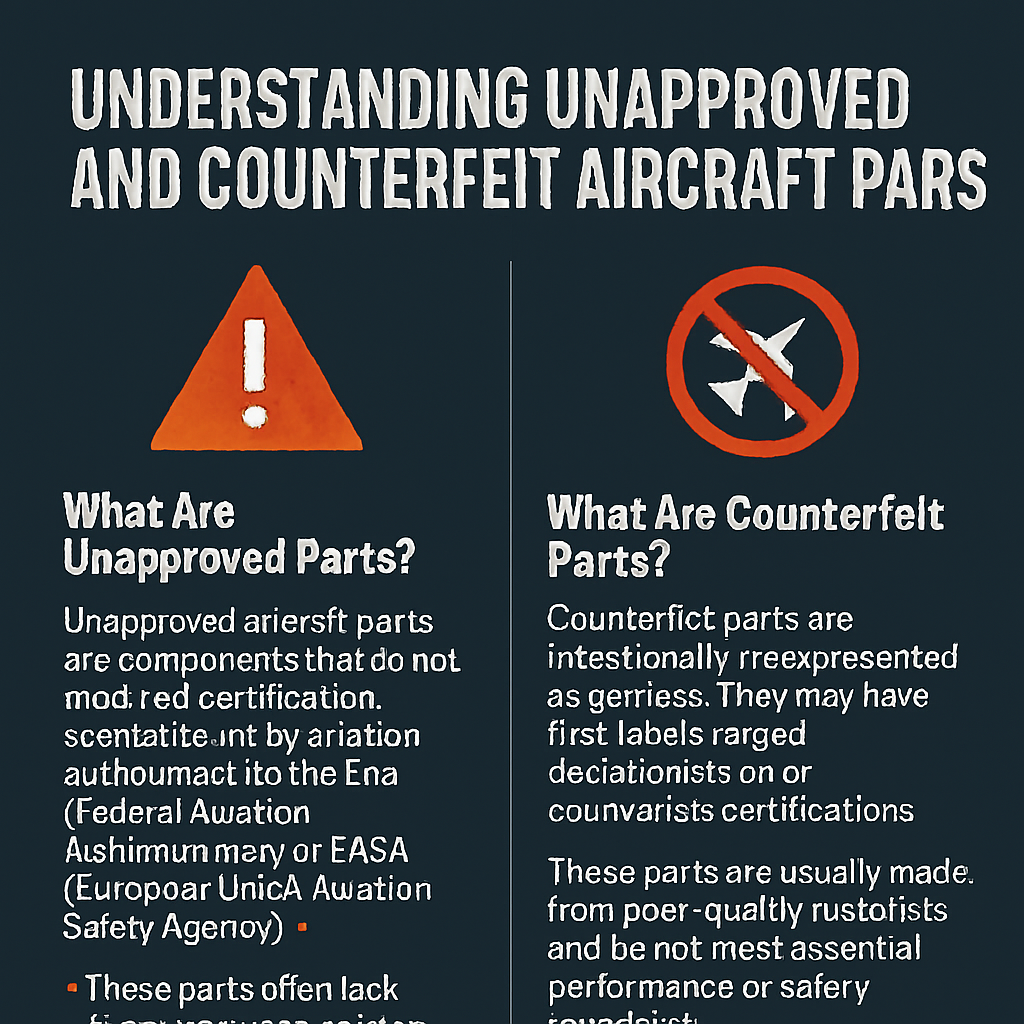
What Are Unapproved Parts?
Unapproved aircraft parts are components that do not meet the certification standards set by aviation authorities like the FAA (Federal Aviation Administration) or EASA (European Union Aviation Safety Agency). These parts often lack proper documentation, traceability, or approval under Part 21 manufacturing rules.
What Are Counterfeit Parts?
Counterfeit parts are intentionally misrepresented as genuine. They may have fake labels, forged documentation, or counterfeit certifications. These parts are usually made from poor-quality materials and do not meet essential performance or safety standards.
Both types are illegal and unsafe, but counterfeit parts are particularly risky because they are designed to deceive.
Safety Risks: Compromised Flight Integrity
Using counterfeit or unapproved parts can lead to serious safety issues. These components may not withstand the high stress, temperature, or vibration conditions that certified parts are built to endure.
✈ Structural Failures
Weak or non-compliant materials can result in cracks, leaks, or complete system failures during fli.
✈ System Malfunctions
Unapproved electronic or hydraulic parts can create errors in communication, navigation, or control systems.
✈ Engine Damage
Counterfeit engine parts can lead to overheating, reduced efficiency, or even engine shutdowns while flying.
In short, installing an unapproved part puts both crew and passengers at risk.
Regularity and Legal Consequences
Aviation is one of the most regulated industries. Authorities like the FAA, EASA, GCAA, and CAO.IRI maintain strict protocols to ensure aircraft safety. Severe Penalties for Non-Compliance:
- Grounding of Aircraft: When discovered, aircraft with non-certified parts are immediately grounded until all components are replaced and re-inspected.
- Fines and Sanctions: Operators and maintenance organizations may incur significant financial penalties.
- License Revocation: Repeated or intentional violations can lead to the suspension or revocation of maintenance or air operator certificates.
A single regulatory lapse can harm an airline’s reputation and operational record for many years.
Financial and Operational Impact
Many companies choose unapproved suppliers to cut costs, but the long-term financial impact often far outweighs any short-term gains.
- Increased Maintenance Costs: Counterfeit parts tend to fail sooner, needing frequent replacements and causing unscheduled downtime.
- Insurance Complications: Most aviation insurance policies will deny claims if unapproved parts are found to have contributed to an incident.
- Operational Delays: Aircraft grounded for investigation or re-certification result in lost revenue and disrupted schedules.
According to aviation safety reports, airlines can lose millions of dollars each year due to the hidden costs of counterfeit parts.
Reputational Damage: Losing Passenger Trust
In aviation, trust is essential. Passengers and partners expect airlines to maintain high safety standards. A single incident involving unapproved parts can permanently damage a company’s image.
Airlines and MRO providers risk being linked to negligence and poor quality control—a label that can drive away customers and partners. Once a reputation is lost in aviation, it is hard to regain.
Detecting and Preventing Counterfeit Parts
Preventing unapproved parts from entering the supply chain requires strict oversight and proactive management.
Best Practices for Prevention:
Work with Certified Suppliers: Always source from approved distributors that have traceable documentation.
Verify Certificates: Look for EASA Form 1, FAA 8130-3, or similar documentation.
Implement Strong Quality Controls: Regular audits, inspections, and record-keeping help spot inconsistencies early.
Use Digital Traceability Tools: Technologies like blockchain and advanced tracking systems are being adopted to verify authenticity across the supply chain.
Train Maintenance Staff: Technicians must learn to recognize signs of counterfeit parts and report suspicious sources.
The Role of Technology and Traceability
The future of aviation safety relies on digital transparency. Modern technologies like blockchain, RFID tagging, and AI-driven verification are helping the industry create a secure, traceable supply network.
By using these tools, airlines and suppliers can:
✔ Instantly verify the origin and certification of components.
✔ Reduce human error in documentation.
✔ Stop counterfeit parts from re-entering circulation.
Industry Collaboration and Reporting
No organization can tackle this issue alone. Collaboration among airlines, manufacturers, and regulators is vital.
Report Suspicious Components: Quickly reporting helps authorities track and eliminate fake suppliers.
Share Data Across Networks: Transparency within MRO and OEM networks can avoid duplicate or unauthorized parts.
Promote Awareness: Regular training and awareness programs ensure that everyone— from procurement to maintenance— understands the risks.
Conclusion: Safety Begins with Authenticity
Using unapproved aircraft parts is not just a technical or financial issue; it’s a matter of life and death. Aviation professionals must uphold high standards of authenticity, certification, and traceability in all maintenance and operations.
Choosing trusted, certified suppliers and following global regulatory standards ensures not only compliance but also confidence—the assurance that every flight prioritizes quality, safety, and integrity.
“Every bolt, wire, and seal matters. Safety isn’t negotiable—it’s engineered.”
Saw the piece—totally on point about how unapproved parts threaten flight safety and the onus on every stakeholder to vet suppliers. In Suplery we champion full traceability and a single dashboard for suppliers to cut risk and keep operations smooth, especially for barbershops and cosmetology studios who rely on clean inventory flow. Our platform also offers a shared cart for real-time order building and automatic stocktakes, which speeds up procurement cycles. If you’re aiming for higher quality control while staying cost-conscious, Suplery can help you stay compliant and efficient. Consider checking it out and see how a 1st-rate procurement system could transform your practice.